““If America continues to make it harder for some of the world's most talented students and workers to come here, they'll go to other countries eager to tap into their creative capabilities—as will American citizens fed up with what they view as an increasingly repressive environment.”
— Dr. Richard Florida, The Flight of the Creative Class
From this quote you can see immediately the sort of society Dr. Florida encourages. What's puzzling is he doesn't attach his cart of creativity to the horse of peace and political liberty.
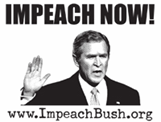
In particular, you'd expect him to lambaste this Neocon bunch for launching expensive wars for the isolated benefit of members of the the Carlyle Group. Is he pulling his punches so Rush Limbaugh won't accuse him of being a Bush-basher? In general, why isn't he a bold opponent of the economically stultifying machinery of government per se?
So right from the gitgo that's my main 900-pound-gorilla reservation about The Creative books. Otherwise, they provide a nice boost to the kinds of people we want to cultivate in society... or even want to be.
Rise was originally recommended to me five years ago by a fellow writer in Michigan. He said Governor Jennifer Granholm was a huge fan of Dr. Florida's book, especially in the context of so many Michiganians leaving the state when they graduate college. It appears many in public office, more on the Democratic side than Republican, are interested in developing and retaining creative communities.
But are they willing to do what it takes?
What became clear from Rise is what Dr. Florida calls the three Ts of creative class communities—Talent, Technology, and Tolerance—occur rarely. And when they do, it's more from the tolerance direction, which is seldom explicitly effected through government policy.
No, it seems Austin, San Francisco, Seattle, Burlington (VT), Boston, the highest American cities on the creative class list, achieve their vaunted status by spontaneous order. Probably, governing bodies in these cities just forgot about pushing people around in that way... and when they wanted to do so, it was too late.
Tolerance is also another word for freedom.
Dr. Florida could easily argue that on the most fundamental level liberty is what the creativity havenots have not. Then the other factors, talent and technology, emerge naturally as governing bodies see their mission as representatives of the citizens preserving the spontaneous order.
They seem to accomplish their mission mainly by removing government obstacles and keeping the infrastructure efficient.
Government never furthered any enterprise but by the alacrity with which it got out of its way. — Thoreau
Doesn't Henry David nail it?
We libertarians need no writer from the halls of the Carnegie Mellon Institute to tell us this dear Hamlet. But it's nice that in Rise Dr. Florida makes such a good statistical case for what creativity is, where it lives, and how we can keep it. Perhaps more important, it encourages readers to be self-consciously aware of ourselves as members of the creative class.
Flight is about society not getting the point of Rise. As a result, we're witnessing a Brain Drain[1] in reverse. Creative people are increasingly leaving the United States for places like New Zealand, Ireland, even to some of former Soviet-bloc countries. Which Dr. Florida documents intelligently.
###
Being in the political persuasion business, it occurs to me, in this statist economy, large, fundamental prescriptive ideas
(such as the rise and flight of the CC) inevitably run up against the "But we just can't!" syndrome. Why do we still have drug laws, coercive taxation, prohibited planet-saving industries such as agricultural hemp?
The fact is we can.
[1] The Brain Drain was a period in the 1960s when salaries for professional people were so much higher in the United States that doctors, lawyers, engineers, scientists emigrated from the suffocation in Europe where socialism was being tried and found wanting.
Read the soon to be updated first edition of the only FS book so far: